Youth Movements
- Manyanshi Joshi
- 3 days ago
- 5 min read

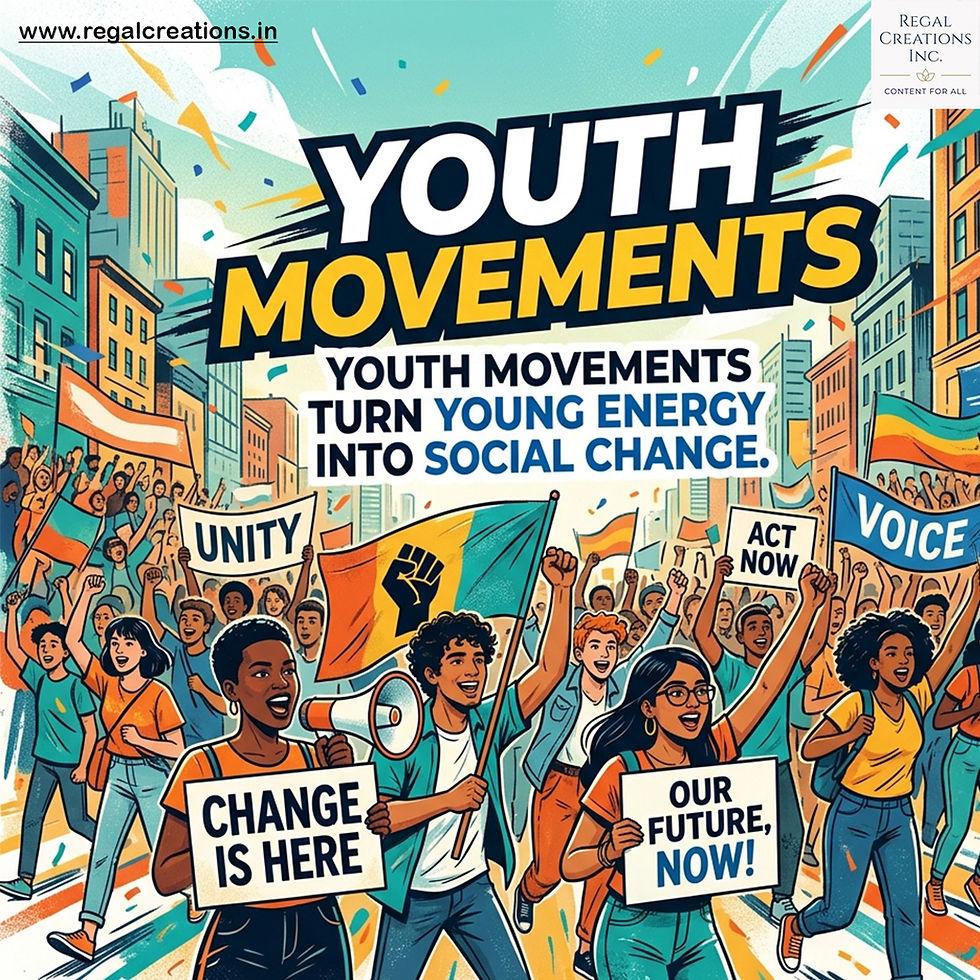
Youth movements are organized efforts led by young people to bring social, political, cultural, or environmental change in society. These movements reflect the energy, creativity, and determination of youth to raise awareness about important issues and shape a better future.
Importance of Youth Movements
Encourage social change and justice
Give young people a voice in decision-making
Spread awareness through activism and digital platforms
Inspire leadership, unity, and responsibility among youth
Major Areas of Youth Movements
Climate Action – Young activists demand action against climate change.
Education Rights – Campaigns for equal and quality education.
Gender Equality – Promoting equal rights and opportunities.
Mental Health Awareness – Encouraging open discussions about mental well-being.
Digital Activism – Using social media to organize campaigns and spread messages quickly.
Real-World Examples
Fridays for Future – A global climate movement started by young activists.
Malala Yousafzai – Advocated for girls’ education worldwide.
Greta Thunberg – Inspired millions of young people to fight climate change.
Impact on Society
Youth movements have influenced laws, public opinion, and government policies. They promote innovation, equality, and active citizenship while encouraging communities to work together for progress.
How Youth Movements Affect Society
Youth movements affect society in many powerful ways because young people bring fresh ideas, energy, and a strong desire for change.
Positive Effects
Social Awareness: They spread awareness about issues like climate change, education, equality, and mental health.
Policy Changes: Governments and organizations may create new laws or reforms due to youth pressure and activism.
Innovation and Creativity: Young people introduce new ideas, technology, and modern solutions to problems.
Stronger Democracy: Youth participation increases voting, debates, and civic engagement.
Global Unity: Social media helps youth movements connect people worldwide for common causes.
Negative Effects
Protests Turning Violent: Some movements can become aggressive or create public disturbance.
Misinformation Online: False information can spread quickly through digital activism.
Political Manipulation: Some groups may use youth movements for political gain.
Social Division: Strong opinions can sometimes create conflicts between groups or generations.
Overall Impact
Youth movements push society toward progress and reform. They challenge outdated systems, encourage public discussion, and motivate communities to improve the future.
Positive movements can:
Fight for freedom, equality, and justice
Improve education, healthcare, and human rights
Protect the environment and public welfare
Encourage democracy and citizen participation
For example:
Indian Independence Movement helped India gain independence.
Fridays for Future raises awareness about climate change.
Civil rights movements in many countries improved equality and social justice.
However, some movements can harm nations if they:
Promote violence or hatred
Spread misinformation
Damage public property or peace
Create division and instability
The impact of a movement depends on its goals, methods, and consequences. Peaceful and constructive movements often strengthen a nation, while violent or destructive ones can weaken it.
Real-World Examples of Youth and Social Movements
Positive Movements
Indian Independence Movement
Young students and activists played a major role in helping India gain freedom through protests, awareness campaigns, and non-cooperation movements.
Fridays for Future
Started by Greta Thunberg, this movement encouraged millions of students worldwide to demand action against climate change.
Civil Rights Movement
Young activists participated in peaceful protests to end racial discrimination and improve equal rights.
Malala Yousafzai’s Education Campaign
Malala’s activism inspired global support for girls’ education and children’s rights.
Examples of Harmful or Violent Movements
French Revolution
While it brought democracy and equality ideas, the violent phase also caused instability and mass executions.
Violent Extremist Movements
Some extremist groups use violence, fear, and propaganda, which can damage national peace, economy, and social unity.
Riots During Protests
In some countries, peaceful protests later turned violent, leading to destruction of public property and social unrest.
Overall Lesson
Real-world movements can create positive reforms or serious problems depending on their purpose and methods. Peaceful and constructive movements usually benefit society, while violent or hateful movements can harm nations.
Major Mistakes in Youth Movements
Youth movements can create positive change, but some mistakes may reduce their effectiveness or create problems.
Common Mistakes
1. Lack of Clear Goals
Some movements begin with strong emotions but without a clear plan or achievable objectives.
2. Spreading Misinformation
False or incomplete information shared through social media can mislead people and damage credibility.
3. Turning Violent
Peaceful protests sometimes become aggressive, leading to riots, property damage, or injuries.
4. Emotional Decision-Making
Young activists may react quickly without fully understanding complex political, social, or economic issues.
5. Ignoring Dialogue
Refusing discussion with governments or opposing groups can increase conflict instead of solving problems.
6. Online-Only Activism
Some movements focus only on hashtags and trends without real-world action or long-term planning.
7. Political Manipulation
Political parties or outside groups may use youth movements for their own interests.
8. Lack of Unity
Internal disagreements, leadership conflicts, or unclear direction can weaken a movement.
Real-World Insight
Some protests around the world started peacefully but later became violent due to poor organization, anger, or outside influence. This often reduced public support for the movement.
Some movements may receive support from opposition parties, activist groups, NGOs, unions, businesses, or other organizations, but it is not correct to say that all youth or public movements are funded to create disturbance in democratic nations.
In democracies, protests and movements can happen for many reasons:
Genuine public dissatisfaction
Social or economic problems
Student or youth concerns
Political disagreements
Human rights or environmental issues
Sometimes opposition parties support movements because they agree with the cause or want to challenge the ruling government. In other cases, governments may accuse opponents of encouraging unrest. The reality often differs from case to case.
There are also examples where:
Movements were largely peaceful and brought reforms
Some protests became violent due to poor control, extremist groups, or outside influence
Misinformation and political agendas increased tensions
For example:
Indian Independence Movement involved political groups, students, and citizens working together for freedom.
Many student protests worldwide have led to education reforms or policy changes.
Some protests in different countries have also been accused of political manipulation or foreign influence.
A healthy democracy usually allows peaceful protest and criticism, while also expecting protests to remain lawful and non-violent.
Present-Day Youth and Public Movements
Today’s movements are often organized through social media, online campaigns, and public demonstrations. Many focus on global and national issues affecting society.
Major Present Movements
Fridays for Future
Young people across many countries demand stronger action against climate change and environmental damage.
Student and Education Movements
Students in different nations protest over:
High education costs
Exam systems
Unemployment
Campus rights and safety
Mental Health Awareness Campaigns
Youth groups now openly discuss stress, anxiety, depression, and digital pressure to reduce stigma and improve support systems.
Digital Rights and Privacy Movements
Young activists raise concerns about online privacy, AI ethics, surveillance, and misuse of personal data.
Gender Equality and Social Justice Movements
Many campaigns support equal opportunities, safety, and fairness for all genders and communities.
Employment and Economic Protests
In several countries, young people protest against unemployment, inflation, and lack of career opportunities.
Challenges in Present Movements
Modern movements also face problems such as:
Fake news and misinformation
Online hate campaigns
Political polarization
Violent clashes during protests
Short attention spans caused by social media trends
How Present Movements Differ from Older Ones
Faster communication through social media
Global participation through the internet
Strong influence of digital creators and online communities
Greater youth involvement in worldwide issues
Conclusion on Youth Movements
Youth movements are a powerful force for social, political, and cultural change. They give young people a platform to express their ideas, challenge injustice, and influence the future of society. When guided by awareness, responsibility, and peaceful action, youth movements can bring positive reforms, innovation, and progress. However, misinformation, violence, or political manipulation can weaken their purpose and create instability. Overall, youth movements reflect the energy and voice of the younger generation in shaping a better and more balanced world.
Thanks for reading!!!!


Comments