Modern Relationships
- Manyanshi Joshi
- 5 days ago
- 5 min read

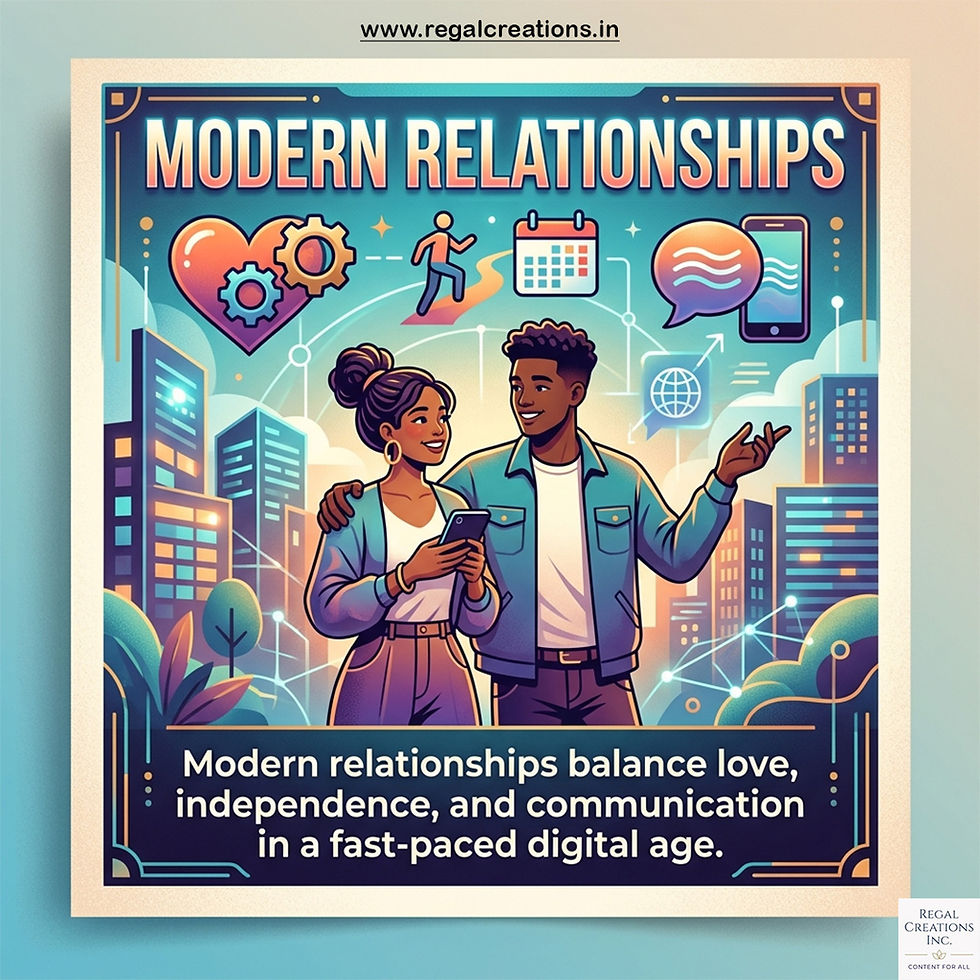
Modern relationships are a mix of old human needs and very new social conditions. At the core, people still want connection, trust, attraction, and stability—but how those play out has changed a lot in the past couple of decades.
One big shift is choice and access. Dating apps and social media have expanded the pool of potential partners massively. That can be empowering, but it also creates a paradox: more options can make people less satisfied, more hesitant to commit, or always wondering if there’s something better one swipe away.
Another change is expectations. Relationships today often carry a heavier load than in the past. People don’t just want a partner—they want a best friend, emotional support system, intellectual equal, co-adventurer, and sometimes even a co-brand (especially online). That can be fulfilling, but it also puts pressure on both people to meet a very high bar.
There’s also a stronger focus on individual identity. Modern relationships tend to value independence alongside togetherness. People are more likely to ask: Does this relationship support who I am and who I want to become? That’s a healthy shift in many ways, but it can also make compromise harder if both partners are highly self-directed.
Communication has evolved too. There’s more awareness of things like boundaries, attachment styles, and emotional intelligence. At the same time, digital communication (texting, DMs) can create misunderstandings, mixed signals, or a lack of depth compared to face-to-face interaction.
You’ll also notice more variety in relationship structures. While traditional monogamy is still the norm, there’s more openness around different models—long-distance relationships, cohabitation without marriage, open relationships, and more. People are questioning default paths instead of just following them.
And finally, there’s the influence of culture and visibility. Social media shows curated versions of love—highlight reels of “perfect” couples—which can distort expectations. Real relationships, with their quiet routines and conflicts, don’t always match that image.
Navigating dating apps today is less about finding the “perfect profile” and more about using the apps intentionally without getting emotionally drained by them.
Here are some practical ways to approach them:
1. Know what you want before you swipe
People use dating apps for very different reasons:
serious relationships
casual dating
validation/attention
friendship
networking or boredom
Being clear about your own goal helps you avoid confusion later. You don’t need a life plan—just enough honesty to guide your choices.
2. Build a profile that feels real
The strongest profiles usually:
show personality, not just appearance
include clear photos
mention specific interests or humor
avoid overly generic lines like “I love traveling and music”
A small detail (“obsessed with chai and late-night walks”) creates more connection than a perfect-looking profile.
3. Don’t treat matches like instant compatibility
Matching only means:
“Both people were curious for one second.”
Real compatibility takes conversation, consistency, and time.
4. Learn to spot low-effort behavior early
Common signs:
dry one-word replies
disappearing and returning repeatedly
only texting late at night
avoiding basic questions
love-bombing too quickly
Consistency matters more than intense early attention.
5. Move from texting to real conversation
Many app connections die because they stay stuck in endless chatting. After a reasonable comfort level:
voice call
video call
casual public meetup
Real-life chemistry often feels very different from texting chemistry.
6. Protect your mental health
Dating apps can create:
comparison
rejection fatigue
validation addiction
burnout
If the app starts affecting self-esteem, take breaks. Your worth is not measured by matches or replies.
7. Stay safe
Always:
meet in public places first
tell someone where you’re going
avoid sharing financial/personal details quickly
trust discomfort if something feels off
8. Don’t confuse attention with connection
A lot of modern dating is high communication but low commitment. Someone texting constantly doesn’t automatically mean emotional maturity or serious intent.
9. Be patient with the process
Most conversations won’t become relationships—and that’s normal. Dating apps are partly filtering systems. A few meaningful connections matter more than hundreds of matches.
Modern dating apps work best when you use them as a tool for connection—not as a measure of your value.
In a fast-paced society, balancing marriage and friendships has become both more difficult and more important. Modern life is filled with work pressure, digital distractions, constant notifications, and busy schedules, leaving people with less time for deep personal connections. Because of this, relationships now require more intentional effort than ever before.
Marriage today is no longer only about financial security or social expectations. Most couples now expect emotional support, companionship, understanding, and personal growth from their partners. While this creates stronger emotional bonds, it can also increase pressure on the relationship. Long work hours, stress, and lack of quality time can slowly create emotional distance if couples stop communicating openly.
At the same time, maintaining friendships has become challenging. As people grow older, careers, relocation, marriage, and responsibilities often reduce social interaction. Many friendships shift from daily contact to occasional check-ins. Social media may create the illusion of connection, but genuine friendship still depends on trust, shared experiences, and emotional presence.
One important challenge in modern relationships is balance. Some people become so focused on romantic relationships that they neglect friendships, while others struggle to divide time between work, partner, family, and friends. Healthy relationships require boundaries, mutual respect, and conscious time management.
Technology has also changed how people maintain connections. Video calls, messaging apps, and social platforms help people stay connected across distances, but digital communication can sometimes replace deeper face-to-face conversations. Spending time together without distractions has become increasingly valuable.
Strong modern relationships often succeed because of:
honest communication
emotional maturity
respect for individuality
quality time
support during stressful periods
Friendships and marriages both play different but equally important roles in emotional well-being. A healthy marriage provides stability and partnership, while strong friendships offer perspective, comfort, identity, and social support outside romantic life.
In today’s fast-moving world, meaningful relationships survive not through constant contact, but through consistent care, trust, and effort. Whether in marriage or friendship, people who prioritize understanding and emotional connection build stronger and healthier bonds over time.
Conclusion on Modern Relationships
Modern relationships are shaped by technology, changing lifestyles, and evolving expectations. While people today have more freedom and opportunities to connect, they also face challenges like busy schedules, digital distractions, and emotional pressure. Successful relationships now depend not only on love, but also on communication, trust, respect, emotional understanding, and balance between personal independence and togetherness. In the end, strong modern relationships are built through genuine effort, mutual support, and meaningful connection in an increasingly fast-paced world.

Comments