Tips for Managing Stress in a Fast-Paced World

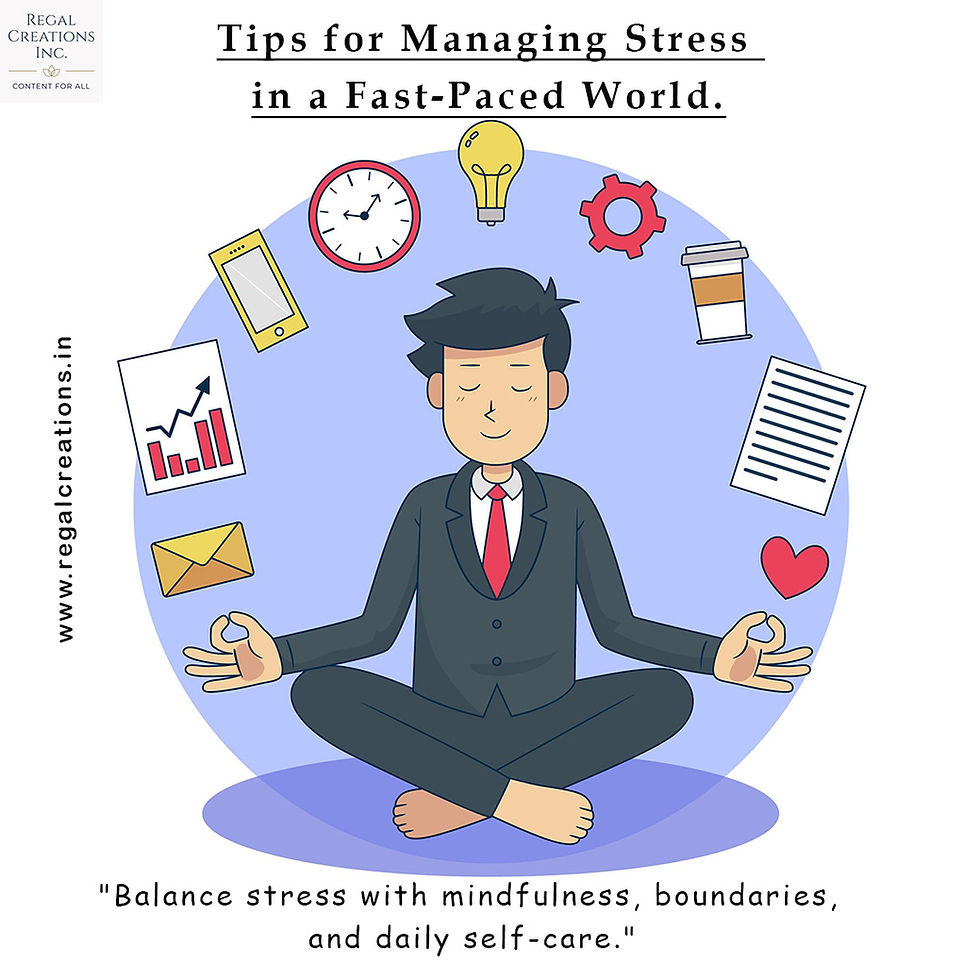
Managing stress in a fast-paced world is essential for both mental and physical well-being. Here are some practical, research-backed tips to help you cope and stay balanced:
1. Prioritize and Plan
Use a to-do list or digital planner to organize your tasks.
Apply the Eisenhower Matrix to distinguish between urgent and important tasks.
Break large tasks into smaller, manageable steps.
2. Practice Mindfulness and Meditation for stress management
Dedicate 5–10 minutes a day to deep breathing, meditation, or mindfulness apps (e.g., Headspace, Calm).
Practice being present in the moment rather than worrying about the future.
3. Exercise Regularly
Physical activity reduces stress hormones like cortisol and increases endorphins.
Aim for at least 30 minutes of walking, cycling, yoga, or strength training most days.
4. Maintain a Healthy Diet
Avoid excessive caffeine, sugar, and processed foods.
Eat a balanced diet with plenty of fruits, vegetables, lean proteins, and whole grains.
5. Sleep Well
Stick to a regular sleep schedule—even on weekends.
Create a relaxing bedtime routine and avoid screens an hour before sleep.
6. Set Boundaries
Learn to say “no” when needed to avoid overcommitment.
Set limits on work hours, emails, and social obligations.
7. Stay Connected
Spend time with supportive friends and family.
Talk to someone—a colleague, friend, or therapist—when feeling overwhelmed.
8. Unplug Regularly
Take breaks from screens and social media.
Designate tech-free times during your day, especially in the morning and before bed.
9. Practice Gratitude
Keep a gratitude journal—write down 3 things you're thankful for each day.
Focusing on positives can shift your perspective and reduce stress.
10. Seek Professional Help When Needed
Don’t hesitate to consult a mental health professional if stress becomes chronic or overwhelming.
Therapy or counseling can provide tools tailored to your personal situation.
Managing stress is necessary because chronic stress can seriously affect your physical health, mental well-being, relationships, and overall quality of life. Here's why it's essential:
🔹 1. Protects Your Physical Health
Chronic stress increases the risk of heart disease, high blood pressure, diabetes, and weakened immunity.
It can lead to headaches, muscle tension, digestive issues, and fatigue.
🔹 2. Supports Mental Health for stress management
Long-term stress is linked to anxiety, depression, burnout, and emotional exhaustion.
It can impair your ability to focus, make decisions, and manage emotions.
🔹 3. Improves Productivity
High stress can reduce efficiency, creativity, and motivation.
Managing stress helps you stay more focused, organized, and effective in both work and daily life.
🔹 4. Enhances Relationships
When stressed, people are more irritable and less patient, which can strain relationships.
Reducing stress leads to better communication, empathy, and emotional availability.
🔹 5. Promotes Longevity and Well-Being
People who manage stress effectively tend to live longer and enjoy a higher quality of life.
Stress management contributes to better sleep, energy levels, and a more positive outlook.
In short, managing stress is not a luxury—it’s a necessity for leading a healthy, fulfilling, and balanced life.
Here are tailored tips for managing work-related stress and personal life stress, since each has different causes and strategies:
💼 Work-Related Stress:
1. Set Clear Boundaries
Define work hours and stick to them—avoid checking emails after hours.
Use tools like time-blocking to protect your personal time.
2. Prioritize and Delegate
Use prioritization methods like the 80/20 rule (focus on what yields the most results).
Don’t hesitate to delegate tasks when appropriate.
3. Take Regular Breaks
Follow the Pomodoro Technique (25 mins work, 5 mins break).
Use breaks to stretch, walk, or simply rest your eyes.
4. Organize Your Workspace
A clean, clutter-free workspace can reduce overwhelm and help you focus.
Use ergonomic furniture to avoid physical strain.
5. Communicate Effectively
Speak up if workloads are too heavy—discuss deadlines with your manager.
Practice assertiveness to handle difficult conversations without aggression.
6. Practice Micro-Mindfulness
Take 1–2 minutes for deep breathing or grounding exercises during busy periods.
🏠 Personal Life Stress:
1. Build a Support System
Talk to family and friends—don’t bottle things up.
Surround yourself with people who lift you up.
2. Limit Overcommitment
Learn to say “no” without guilt.
Simplify your schedule and focus on what truly matters.
3. Practice Self-Care Daily
Engage in activities that relax or fulfill you (reading, hobbies, music, nature).
Carve out “you time” even if it’s just 15 minutes.
4. Financial Stress? Make a Plan
Create a simple budget, and seek help from financial advisors if needed.
Breaking financial worries into manageable steps reduces anxiety.
5. Improve Sleep Hygiene
Keep a consistent bedtime, avoid caffeine late, and reduce screen time before bed.
Good sleep is a powerful buffer against emotional stress.
6. Seek Help for Relationship Stress
Open, honest communication is key—consider couples or family therapy if needed.
Avoid suppressing emotions; express needs calmly and clearly.
Consultants—whether in mental health, business, or life coaching—often recommend structured, practical approaches to help individuals overcome stress. Here are some expert consultant tips to manage and reduce stress effectively:
🧠 1. Identify the Root Causes
Tip from therapists and coaches: Keep a stress journal for 1–2 weeks. Note when you feel stressed, what triggered it, how you responded, and how you felt afterward. This helps you see patterns and target the real sources.
📋 2. Use Strategic Time Management
Tip from productivity consultants: Use the "4 D's" technique:
Do it now
Defer it to later
Delegate it to someone else
Delete it if unnecessary
Tools like time-blocking or Eisenhower Matrix help prioritize effectively and reduce workload pressure.
🧘 3. Incorporate Stress-Relief Routines
Tip from wellness consultants: Integrate 10–20 minutes of daily relaxation practices like:
Meditation or guided imagery
Breathwork (e.g., box breathing)
Progressive muscle relaxation
💬 4. Reframe Negative Thinking
Tip from cognitive-behavioral therapists (CBT):Practice cognitive restructuring by:
Identifying negative thoughts (e.g., “I can’t handle this”)
Challenging them (Is this 100% true?)
Replacing with balanced thoughts (e.g., “I’ve managed hard things before.”)
🏃 5. Move Your Body
Tip from health consultants: Exercise is often called "natural stress medicine." Even 20–30 minutes of brisk walking, yoga, or dancing can significantly lower cortisol levels.
📵 6. Set Tech and Communication Boundaries
Tip from executive/life coaches: Set limits on:
Notifications
Screen time (especially social media)
Work communication outside office hours
Try a digital detox day weekly.
🧩 7. Break Problems into Actionable Steps
Tip from problem-solving consultants: Stress often comes from feeling overwhelmed. Break big problems into small, achievable tasks and set micro-goals.
🗣️ 8. Don’t Go It Alone
Tip from mental health professionals: If stress persists, talk to:
A licensed therapist or counselor
A life coach for goal setting and accountability
A support group or peer mentor
They can offer fresh perspectives and coping tools.
📈 9. Track Progress and Celebrate Small Wins
Tip from performance coaches: Use a habit tracker or journal to log what’s working. Celebrate even small improvements—it reinforces motivation and builds resilience.
✅ Conclusion: Tips for Managing Stress in a Fast-Paced World
In today’s fast-moving world, stress is almost unavoidable—but it is manageable. The key lies in being proactive rather than reactive. By identifying the sources of stress and adopting healthy coping strategies—like setting boundaries, practicing mindfulness, staying active, and prioritizing self-care—you can protect your mental and physical well-being. Whether stress arises from work or personal life, simple, consistent habits can lead to a more balanced, resilient, and fulfilling life. Remember, managing stress isn’t a one-time fix—it’s a daily practice and a lifelong investment in your health.
Thanks for reading!!

Comments