Streaming Fatigue

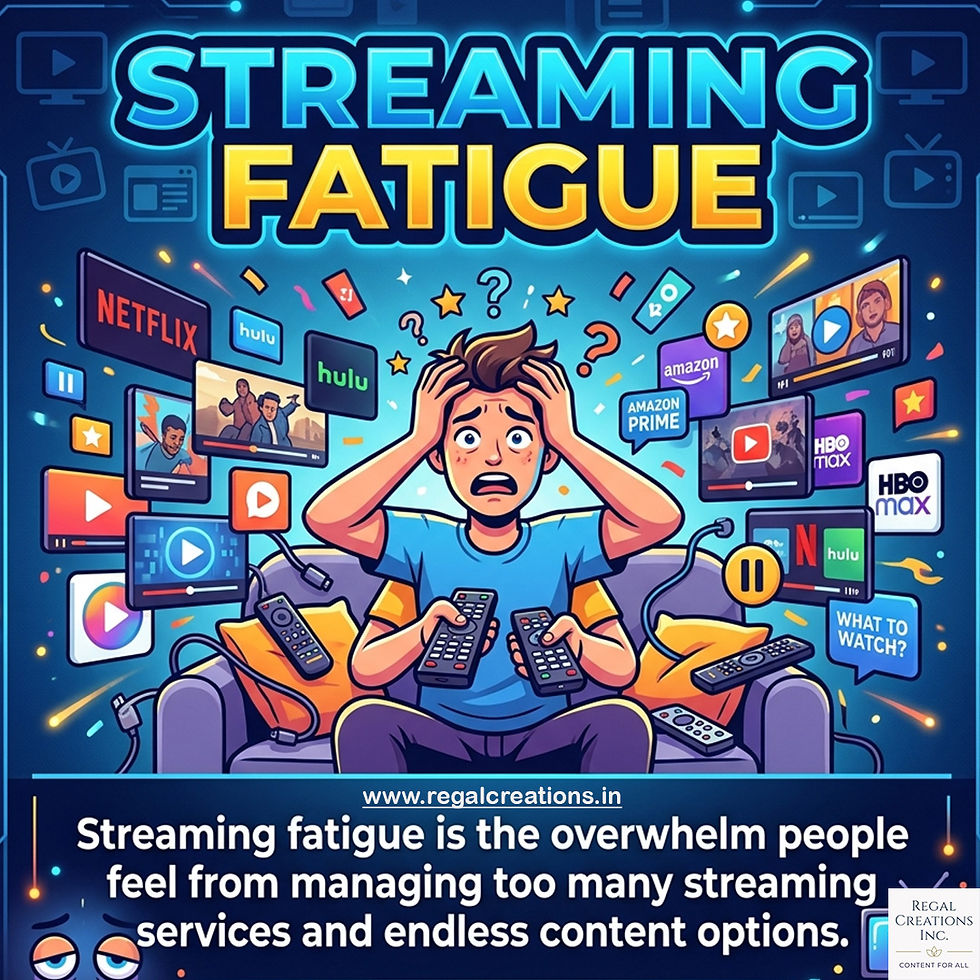
Streaming Fatigue refers to the growing sense of exhaustion, frustration, or overwhelm caused by the abundance of streaming platforms, endless content choices, subscription costs, and constant pressure to keep up with new shows, movies, and online media.
Causes of Streaming Fatigue
Too many platforms: Content is spread across services like Netflix, Disney+, Amazon Prime Video, and others.
Choice overload: Thousands of titles make it difficult to decide what to watch.
Subscription stacking: Paying for multiple services increases costs.
Content saturation: New releases arrive faster than viewers can consume them.
Fear of Missing Out (FOMO): Social media discussions create pressure to stay current.
Consequences
Decision fatigue and wasted browsing time.
Reduced enjoyment of entertainment.
Increased subscription cancellations and service hopping.
Return to traditional TV, physical media, or selective viewing habits.
Growing interest in curated recommendations and shorter content formats.
Examples in Different Countries
United States: Consumers juggle multiple streaming subscriptions, leading to rising cancellation rates.
United Kingdom: Viewers increasingly rotate subscriptions instead of maintaining many simultaneously.
India: Rapid growth of regional-language streaming services adds more choices and competition.
South Korea: Domestic and international platforms compete for audience attention with constant content releases.
Policy and Industry Responses
Bundled subscription packages.
Ad-supported lower-cost plans.
Improved recommendation algorithms powered by AI.
Content aggregation platforms that combine multiple services into one interface.
Conclusion
Streaming fatigue reflects a paradox of the digital age: unlimited entertainment options can reduce satisfaction rather than increase it. As content libraries continue to expand, consumers are becoming more selective about how and where they spend their viewing time.
The saturation of subscription services refers to the point at which consumers are overwhelmed by the growing number of paid subscriptions for entertainment, software, news, fitness, music, and other digital services. As more companies adopt subscription-based business models, users face increasing costs and subscription fatigue.
Key Reasons
Too many competing services offering exclusive content or features.
Rising monthly costs from maintaining multiple subscriptions.
Subscription fragmentation, forcing users to subscribe to several platforms to access desired content.
Economic pressures encouraging consumers to cut non-essential expenses.
Difficulty tracking recurring payments, leading to frustration and cancellations.
Examples
Entertainment: Netflix, Disney+, Amazon Prime Video, and others compete for viewers.
Music: Spotify, Apple Music.
Software: Adobe Creative Cloud and Microsoft 365 rely on recurring subscriptions.
Consequences
Consumers become more selective and cancel unused services.
Increased "subscription hopping," where users subscribe temporarily and then leave.
Companies introduce bundles, discounts, and ad-supported tiers to retain customers.
Growth of tools that help users manage and track subscriptions.
Conclusion
Subscription service saturation highlights the limits of the subscription economy. While subscriptions provide convenience and recurring revenue, an overcrowded market can lead to consumer fatigue, forcing companies to compete harder for attention and loyalty.
The return of physical media refers to the renewed popularity of tangible formats such as vinyl records, CDs, DVDs, Blu-rays, books, film cameras, and printed magazines despite the dominance of digital streaming and downloads. Many consumers are rediscovering the value of owning physical copies rather than relying solely on digital platforms.
Why Physical Media Is Making a Comeback
1. Ownership and Control
Physical media provides permanent ownership. Unlike streaming content, it cannot disappear due to licensing changes, subscription cancellations, or platform shutdowns.
2. Nostalgia and Collectibility
Many consumers enjoy the emotional connection and collectible nature of vinyl records, special-edition books, and boxed movie sets.
3. Higher Quality Experience
Audiophiles often prefer vinyl records and CDs for their sound quality, while movie enthusiasts appreciate Blu-ray discs for superior video and audio fidelity.
4. Digital Fatigue
Constant streaming, notifications, and screen time have led some people to seek more intentional and offline forms of entertainment.
5. Preservation of Culture
Physical media helps preserve content that may become unavailable online due to licensing disputes, censorship, or corporate decisions.
Examples in Different Countries
United States: Vinyl record sales have experienced significant growth, attracting both collectors and younger listeners.
United Kingdom: Independent record stores and physical bookshops have seen renewed interest.
Japan: CDs remain popular, supported by strong collector culture and exclusive releases.
Germany: Physical books and vinyl records continue to maintain a loyal customer base despite digital alternatives.
Challenges
Higher production and distribution costs.
Storage space requirements.
Less convenience compared to instant digital access.
Conclusion
The return of physical media does not signal the end of digital entertainment. Instead, it reflects a desire for ownership, authenticity, and deeper engagement with content in an increasingly subscription-based world.
Free Ad-Supported TV (FAST) refers to television and streaming services that provide content at no cost to viewers while generating revenue through advertisements. Unlike subscription-based platforms, FAST services allow users to watch movies, TV shows, news, and live channels without paying a monthly fee.
Why FAST Is Growing
1. Subscription Fatigue
As consumers become overwhelmed by the rising number and cost of streaming subscriptions, many are turning to free alternatives.
2. Cost Savings
FAST services offer entertainment without monthly fees, making them attractive during periods of economic uncertainty.
3. Familiar TV Experience
Many FAST platforms replicate traditional channel surfing, providing scheduled programming alongside on-demand content.
4. Advertiser Demand
Brands value FAST platforms because they reach large audiences who may no longer watch traditional cable television.
Popular Examples
Tubi, Pluto TV, The Roku Channel, and Samsung TV Plus have attracted millions of viewers by offering free access to movies, TV shows, and live channels supported by advertisements.
Advantages
No subscription fees.
Easy access across smart TVs and mobile devices.
Large libraries of content.
Live channels that mimic traditional television.
Challenges
Frequent advertising interruptions.
Smaller content libraries compared to premium streaming services.
Limited access to the newest blockbuster releases.
Impact on the Media Industry
FAST platforms are reshaping the streaming landscape by creating a middle ground between expensive subscriptions and traditional broadcast television. Many media companies now license older content to FAST services to generate additional revenue.
Conclusion
The rise of Free Ad-Supported TV reflects a shift in consumer preferences toward affordable entertainment. As subscription costs increase, FAST platforms are becoming an increasingly important part of the future television ecosystem.
Examples of Streaming Fatigue
1. Subscription Overload
A viewer subscribes to Netflix, Disney+, Amazon Prime Video, and Max, only to realize the combined monthly cost rivals a traditional cable package.
2. Endless Browsing, Little Watching
Many users spend 20–30 minutes scrolling through recommendations before giving up or rewatching an old favorite because there are too many choices.
3. Platform Hopping
A fan subscribes to one service to watch a specific show, cancels after finishing it, and then moves to another platform for the next trending series.
4. Missing Exclusive Content
A movie lover discovers that their favorite films and shows are scattered across multiple services, requiring several subscriptions to access everything they want.
5. Keeping Up with Trends
Viewers feel pressured to watch every popular series discussed on social media, turning entertainment into a task rather than a leisure activity.
6. Return to Free Ad-Supported TV
Some consumers abandon paid streaming services and switch to free ad-supported platforms to reduce costs and simplify their viewing habits.
7. Rewatching Instead of Exploring
Faced with overwhelming content libraries, users often choose familiar shows such as old sitcoms or classic movies rather than searching for something new.
8. Digital Burnout
After spending the day online for work or study, people may avoid streaming altogether and choose books, gaming, outdoor activities, or physical media instead.
Streaming Fatigue: Examples in Different Countries
🇺🇸 United States
Consumers often juggle multiple streaming subscriptions, including Netflix, Disney+, Hulu, and Max.
Rising subscription costs have led many households to cancel services or rotate subscriptions monthly.
The growth of free ad-supported TV (FAST) platforms reflects increasing streaming fatigue.
🇬🇧 United Kingdom
The cost-of-living crisis has encouraged viewers to cut back on entertainment spending.
Many households share accounts, switch between services, or return to traditional television and free streaming options.
🇮🇳 India
Viewers face a growing number of regional and international streaming platforms.
Price-sensitive consumers often subscribe only during major sports tournaments or for popular series, then cancel afterward.
Free, ad-supported content remains highly popular.
🇯🇵 Japan
Despite the popularity of streaming, many consumers continue to buy DVDs, Blu-rays, and CDs.
Strong collector culture reduces dependence on multiple streaming subscriptions.
🇰🇷 South Korea
Users have access to both global and domestic streaming services, creating intense competition for attention.
The constant release of new dramas and entertainment content can lead to content overload.
🇩🇪 Germany
Many consumers maintain a cautious approach to subscriptions and prefer selective streaming.
Physical books, television broadcasts, and physical media remain popular alternatives.
🇸🇪 Sweden
As one of the earliest adopters of streaming, Swedish consumers are increasingly selective about which services they keep.
Subscription consolidation and sharing have become common practices.
🇦🇺 Australia
Geographic isolation and content licensing differences often require multiple subscriptions to access desired content.
Viewers frequently switch between platforms to manage costs.
While streaming fatigue appears differently across countries, the common themes are rising subscription costs, content overload, and the challenge of managing multiple platforms. As a result, consumers worldwide are becoming more selective, turning to ad-supported services, rotating subscriptions, or returning to physical media and traditional television.
Conclusion on Streaming Fatigue
Streaming fatigue has emerged as a major consequence of the digital entertainment boom. While streaming services offer unprecedented convenience and choice, the growing number of platforms, rising subscription costs, and overwhelming volume of content have left many consumers feeling exhausted rather than entertained. As a result, viewers are becoming more selective, rotating subscriptions, embracing free ad-supported services, or returning to physical media. The trend highlights a key paradox of the streaming era: more options do not always lead to a better user experience.
Thanks for reading!!!!!


Comments