Smart nutrition

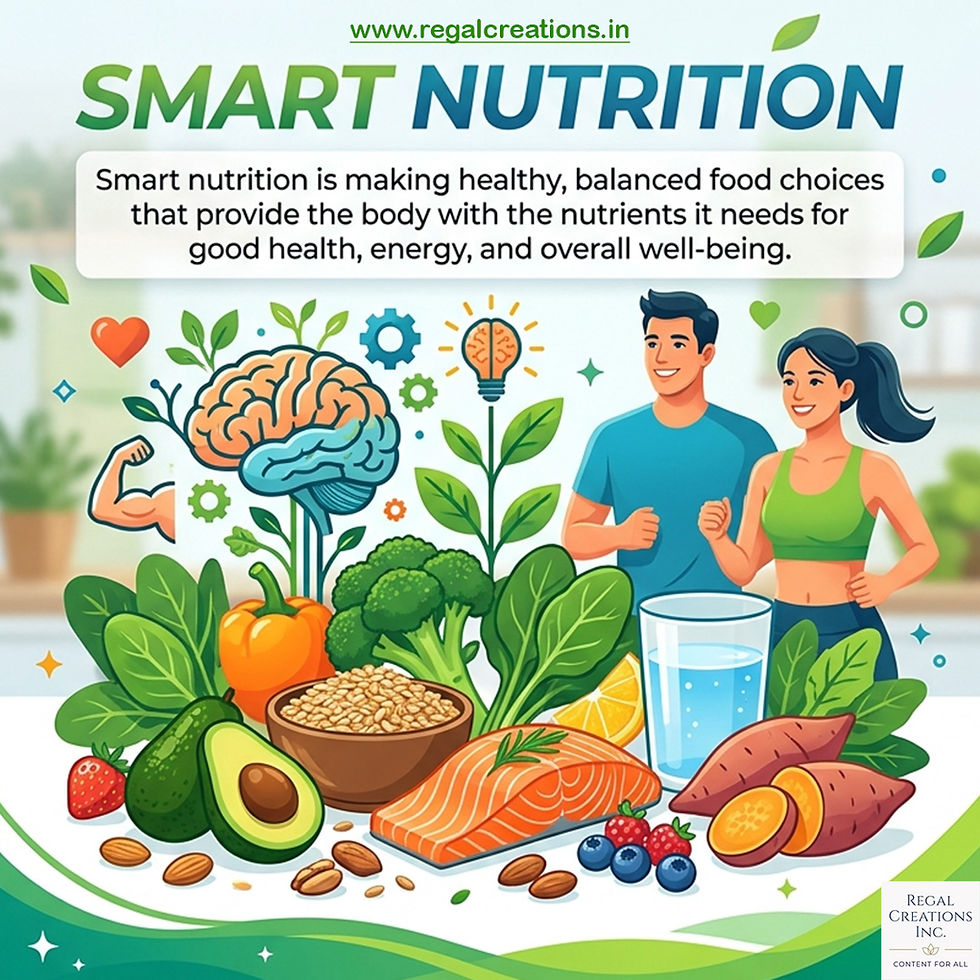
Smart nutrition is the practice of making informed food choices that provide the right balance of nutrients to support health, energy, growth, and disease prevention. It focuses on eating quality foods in appropriate portions rather than following restrictive diets. A smart nutrition approach emphasizes balance, variety, and sustainability to meet individual health needs and lifestyle goals.
Key Principles of Smart Nutrition
Eat a balanced diet with carbohydrates, proteins, healthy fats, vitamins, and minerals.
Include plenty of fruits, vegetables, whole grains, and lean proteins.
Drink enough water throughout the day.
Limit foods high in added sugar, salt, and unhealthy fats.
Practice portion control and avoid overeating.
Read nutrition labels to make informed food choices.
Benefits
Improves physical and mental health.
Boosts energy and productivity.
Supports healthy weight management.
Strengthens immunity.
Reduces the risk of chronic diseases such as diabetes, heart disease, and obesity.
Real-World Examples
Choosing brown rice instead of white rice for more fiber.
Replacing sugary drinks with water or fresh buttermilk.
Eating fruits and nuts instead of chips as snacks.
Filling half the plate with vegetables at lunch and dinner.
Planning meals in advance to avoid unhealthy fast food.
Conclusion
Smart nutrition is not about strict dieting but about making healthier food choices every day. Small, consistent changes in eating habits can lead to better health, improved performance, and a higher quality of life over time.
Cutting through diet myths means separating scientific facts from common misconceptions about food, weight loss, and healthy eating. Many popular diets promise quick results, but lasting health comes from balanced nutrition, regular physical activity, and sustainable habits—not fad diets or miracle foods.
Common Diet Myths and Facts
Myth: Carbohydrates make you gain weight.
Fact: Whole grains, fruits, and vegetables are healthy carbohydrate sources that provide energy and fiber.
Myth: Skipping meals helps you lose weight faster.
Fact: Skipping meals can slow metabolism, increase hunger, and lead to overeating later.
Myth: Fat should be completely avoided.
Fact: Healthy fats from nuts, seeds, avocados, and olive oil are essential for brain function and heart health.
Myth: Detox diets cleanse the body.
Fact: The liver and kidneys naturally remove waste from the body without special detox products.
Myth: All calories are the same.
Fact: While calories matter, nutrient-rich foods provide vitamins, minerals, and fiber that support overall health.
Real-World Examples
Choosing whole wheat bread instead of avoiding bread completely.
Eating balanced meals rather than relying on expensive detox juices.
Including healthy fats like almonds and walnuts in daily snacks.
Following a consistent eating routine instead of crash dieting before an event.
Conclusion
Understanding the truth behind diet myths helps people make healthier, evidence-based choices. Sustainable eating habits, balanced meals, and regular exercise are far more effective than quick-fix diets for achieving long-term health.
Diet myths often spread through social media, advertisements, and word of mouth. Basic nutrition science helps us understand how the body actually uses food, making it easier to choose healthy habits over quick fixes.
Basic Science Behind Nutrition
Carbohydrates are the body's main source of energy. They are broken down into glucose, which fuels the brain, muscles, and other organs.
Proteins are made of amino acids that help build and repair muscles, tissues, and enzymes.
Fats provide long-lasting energy, support hormone production, and help absorb vitamins A, D, E, and K.
Vitamins and minerals support immunity, bone health, metabolism, and many other body functions.
Water is essential for digestion, temperature regulation, nutrient transport, and waste removal.
Common Diet Myths Explained with Science
1. Myth: Carbohydrates make you fat.Science: Carbohydrates provide about 4 calories per gram and are the body's preferred energy source. Weight gain occurs when total calorie intake exceeds calorie expenditure—not because of carbohydrates alone. Whole grains, fruits, and vegetables are healthy carbohydrate sources.
2. Myth: Skipping meals burns more fat.Science: The body needs a regular supply of energy. Skipping meals can lower blood sugar, increase hunger hormones, and make overeating more likely later.
3. Myth: Eating fat makes you fat.Science: Healthy fats provide 9 calories per gram and are essential for hormone production, brain function, and absorbing fat-soluble vitamins. Excess calories from any source—not fat alone—can lead to weight gain.
4. Myth: Detox diets remove toxins.Science: The liver and kidneys naturally filter and remove waste products. There is little scientific evidence that detox diets or juices improve this process in healthy people.
5. Myth: High-protein diets alone build muscle.Science: Muscle growth requires both adequate protein and strength training. Without exercise, extra protein is not automatically converted into muscle.
Real-World Examples
Choosing oats instead of sugary cereals provides slow-releasing carbohydrates and fiber for sustained energy.
Eating eggs, dal, or paneer with meals helps repair and maintain muscles.
Snacking on nuts instead of fried chips provides healthy fats and essential nutrients.
Drinking water instead of sugary soft drinks reduces excess sugar intake while supporting hydration.
Conclusion
Basic science shows that no single food is "good" or "bad." Health depends on overall eating patterns, balanced nutrition, portion control, and regular physical activity. Understanding how nutrients work helps people avoid diet myths and make informed food choices.
Examples of Smart Nutrition
Balanced Breakfast
Example: Oats with milk, banana, and a handful of almonds.
Why it's smart: Provides carbohydrates for energy, protein for muscle repair, healthy fats, and fiber to keep you full.
Healthy Lunch
Example: Brown rice, dal, mixed vegetables, salad, and curd.
Why it's smart: Offers a balanced mix of protein, complex carbohydrates, vitamins, minerals, and probiotics.
Smart Snacking
Example: Apple with peanut butter or a handful of roasted chickpeas.
Why it's smart: Prevents hunger between meals while supplying fiber and protein.
Choosing Water Over Sugary Drinks
Example: Drinking water, coconut water, or buttermilk instead of soft drinks.
Why it's smart: Reduces added sugar intake and keeps the body hydrated.
Portion Control
Example: Filling half the plate with vegetables, one-quarter with whole grains, and one-quarter with lean protein.
Why it's smart: Ensures balanced nutrition without overeating.
Healthy Cooking Methods
Example: Grilling, steaming, or baking food instead of deep-frying.
Why it's smart: Reduces unhealthy fat intake while preserving nutrients.
Reading Nutrition Labels
Example: Choosing a breakfast cereal with less added sugar and more fiber.
Why it's smart: Helps make informed and healthier food choices.
Eating Seasonal Fruits and Vegetables
Example: Mangoes in summer, oranges in winter, and leafy greens throughout the year.
Why it's smart: Seasonal produce is often fresher, more nutritious, and cost-effective.
Including Protein in Every Meal
Example: Eggs, paneer, tofu, fish, chicken, lentils, or beans.
Why it's smart: Supports muscle maintenance, growth, and longer-lasting fullness.
Planning Meals Ahead
Example: Preparing healthy lunches at home instead of relying on fast food.
Why it's smart: Saves time, reduces unhealthy choices, and promotes consistent eating habits.
Real-World Example
A college student packs a lunch containing whole-wheat chapati, grilled paneer, mixed vegetables, a fruit, and a water bottle instead of buying burgers and sugary drinks every day. This provides balanced nutrition, sustained energy, and better concentration throughout the day.
Conclusion on Smart Nutrition
Smart nutrition is about making informed, balanced, and sustainable food choices that support overall health and well-being. Rather than following fad diets or quick fixes, it focuses on eating a variety of nutrient-rich foods in the right portions. By combining healthy eating habits with regular physical activity and proper hydration, individuals can maintain a healthy weight, reduce the risk of chronic diseases, and improve both physical and mental performance. Small, consistent changes in daily eating habits can lead to lifelong health benefits.
Thanks for reading!!!!!!


Comments