Skill Redundancy
- Manyanshi Joshi
- Jul 19
- 3 min read


Skill Redundancy is the situation where a skill that was once valuable becomes less important or unnecessary because of technological advancements, automation, changing industry needs, or shifts in the job market. As new tools and technologies emerge, workers must continuously learn and update their abilities to remain relevant.
Examples
Data entry jobs are declining due to AI and automation software.
Traditional cashiers are being replaced by self-checkout systems.
Typing and basic computer skills are no longer enough for many office jobs; employers now seek digital literacy, data analysis, and AI skills.
Manufacturing workers increasingly need to operate and maintain automated machines instead of performing manual tasks.
Skill redundancy highlights the importance of lifelong learning. Continuously developing new skills and adapting to technological changes helps individuals stay competitive and employable in an evolving workforce.
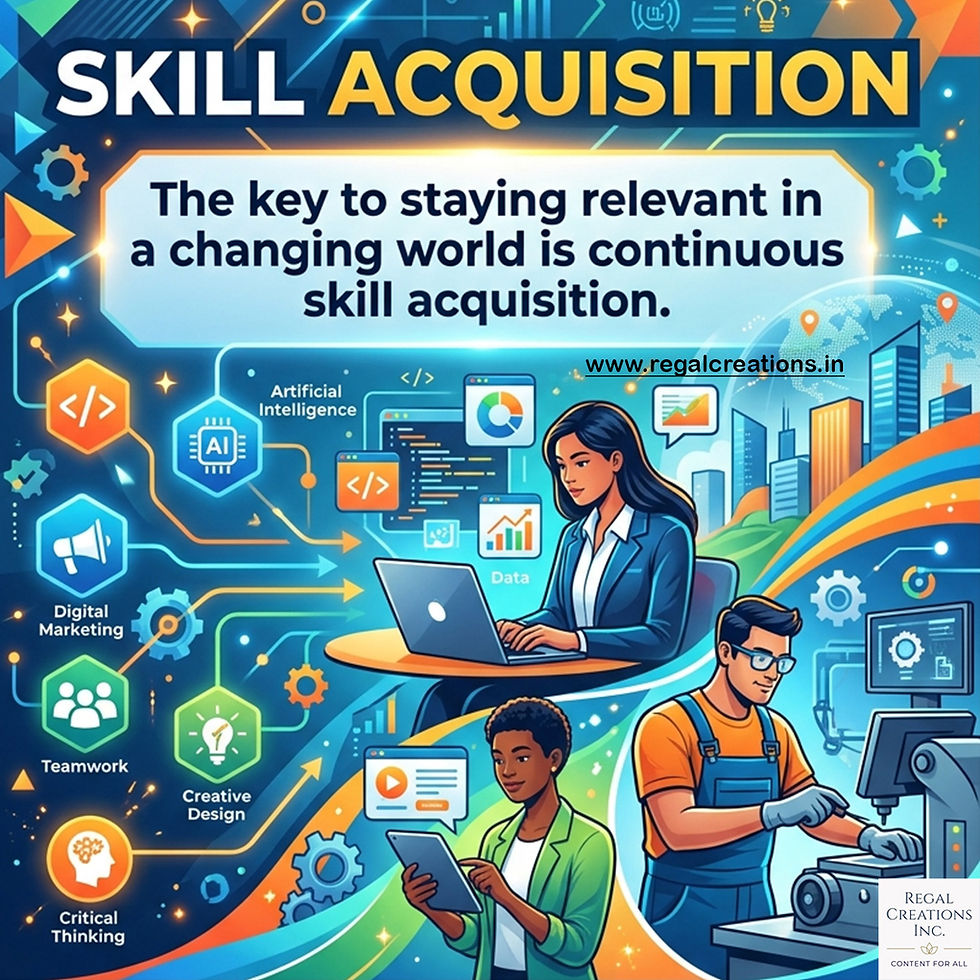
Continuous upskilling means regularly learning new knowledge and improving existing skills to stay relevant in a changing world. Here are effective ways to do it:
Take Online Courses – Use platforms like Coursera, edX, Udemy, or LinkedIn Learning to learn new technical and professional skills.
Earn Professional Certifications – Gain industry-recognized certifications in areas such as digital marketing, data analytics, AI, finance, or project management.
Read Regularly – Follow books, research articles, industry blogs, and business news to stay updated with trends.
Practice New Skills – Apply what you learn through projects, internships, freelancing, or simulations.
Attend Workshops and Webinars – Participate in seminars, conferences, and training programs to learn from experts.
Develop Digital Skills – Learn tools like Excel, Power BI, AI applications, cloud computing, coding, or business analytics.
Seek Feedback and Mentorship – Learn from experienced professionals who can guide your career growth.
Improve Soft Skills – Strengthen communication, leadership, teamwork, adaptability, problem-solving, and emotional intelligence.
Network with Professionals – Join professional associations, LinkedIn groups, and industry communities to exchange knowledge.
Adopt a Lifelong Learning Mindset – Stay curious, embrace change, and dedicate time each week to learning.
Conclusion
Continuous upskilling is the key to long-term career success. By consistently learning and adapting to new technologies and industry demands, individuals can remain competitive, increase employability, and seize new opportunities.
To remain competitive in a rapidly changing job market, individuals must continuously adapt to new technologies, industry trends, and employer expectations. This can be achieved by regularly upgrading technical and soft skills, earning relevant certifications, gaining practical experience through projects or internships, networking with professionals, and embracing lifelong learning. Being flexible, digitally literate, and open to change helps individuals stay employable and seize new career opportunities.
Real-World Examples of Skill Redundancy
Banking Sector (ATMs & Digital Banking)
Many routine bank teller tasks, such as cash withdrawals and balance inquiries, have been replaced by ATMs and mobile banking apps. Bank employees now need skills in customer advisory services, financial planning, and digital banking.
Retail Industry (Self-Checkout Systems)
Supermarkets increasingly use self-checkout kiosks, reducing the need for traditional cashier roles. Workers are shifting toward customer service, inventory management, and store operations.
Manufacturing (Industrial Robots)
Automotive companies use robots for welding, painting, and assembly, making repetitive manual production skills less valuable. Workers now require skills in robotics, automation, and machine maintenance.
Travel Industry (Online Booking Platforms)
Travel agents who mainly booked flights and hotels have seen demand decline as customers use online platforms. Modern travel professionals focus on customized travel planning and specialized experiences.
Media Industry (AI Content Tools)
AI tools can quickly generate basic articles, captions, and reports, reducing demand for routine content writing. Writers who specialize in research, creativity, storytelling, and editing remain highly valuable.
Photography (Smartphone Cameras)
Advances in smartphone cameras have reduced demand for basic photography services. Professional photographers now differentiate themselves through creative editing, branding, and specialized photography such as weddings and commercial shoots.
Key Takeaway
These examples show that technology rarely eliminates all jobs—it changes the skills needed for them. Workers who reskill and adapt to new technologies are better positioned for long-term career success.
Conclusion on Skill Redundancy
Skill redundancy is a natural outcome of technological progress, automation, and changing industry demands. As some skills become outdated, new opportunities emerge for those willing to learn and adapt. Continuous upskilling, reskilling, and lifelong learning are essential to remain employable, competitive, and successful in today's evolving job market.
Thanks for reading !!!!


Comments