Rebuilding Real-World Connection
- Manyanshi Joshi
- 18 hours ago
- 3 min read

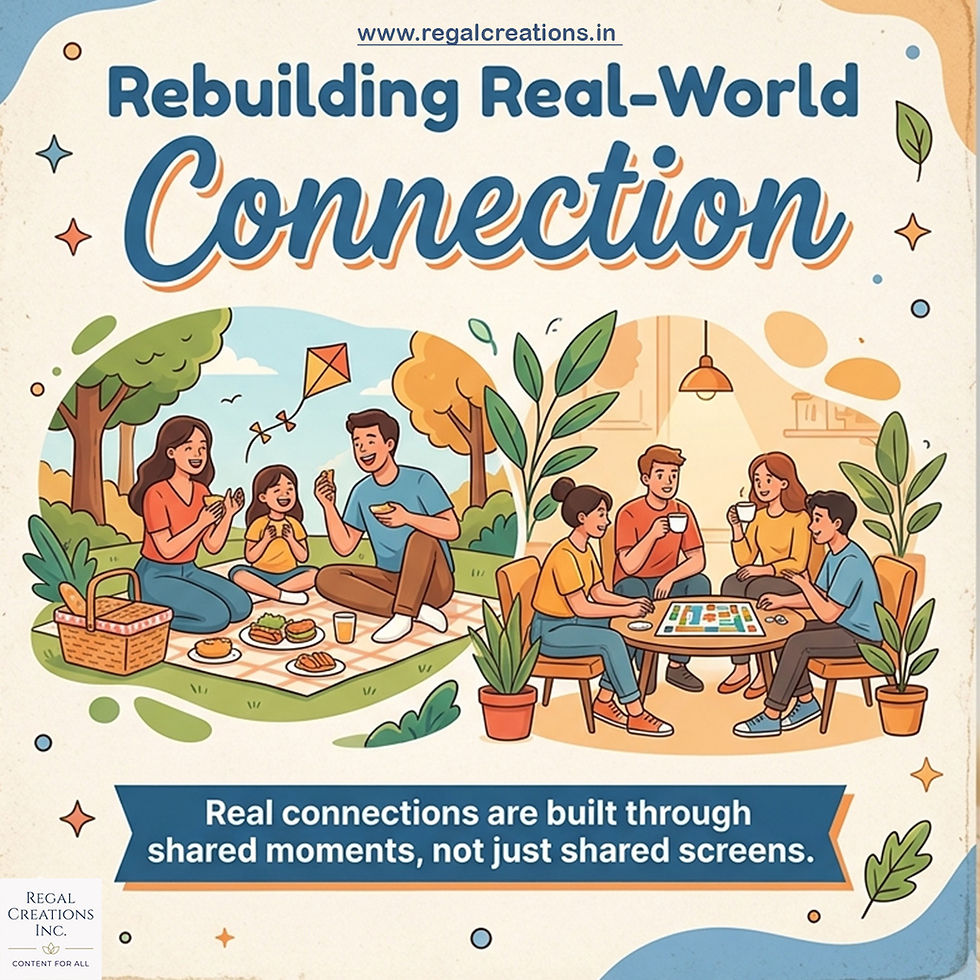
Rebuilding Real-World Connection refers to the growing effort to strengthen face-to-face relationships and meaningful social interactions after years of increased digital communication, social media use, and remote lifestyles. It emphasizes spending quality time with family, friends, and local communities to improve emotional well-being.
Why is it Important?
Reduces loneliness and social isolation.
Improves mental health and emotional resilience.
Builds trust, empathy, and communication skills.
Strengthens families and local communities.
Encourages a healthier balance between online and offline life.
Real-World Examples
Community events: Neighborhood clean-up drives, cultural festivals, and local fairs that bring people together.
Book clubs and hobby groups: People joining reading circles, photography clubs, or sports teams to meet others with similar interests.
Digital detox retreats: Individuals spending weekends without smartphones to reconnect with nature and loved ones.
Family traditions: Regular family dinners or game nights replacing screen time.
Conclusion
Rebuilding real-world connections is essential in today's digital age. While technology helps us stay connected, genuine face-to-face interactions create stronger relationships, improve mental well-being, and foster a greater sense of belonging.
Today, people are finding new and meaningful ways to build real relationships beyond traditional social circles. Instead of relying only on social media, they are engaging in shared activities and community experiences.
Creative Ways
Hobby-based communities: Joining book clubs, art classes, fitness groups, gardening clubs, or photography meetups.
Volunteering: Participating in charity work, environmental clean-up drives, and community service projects.
Co-working spaces: Freelancers and remote workers connect through shared workplaces and networking events.
Local community events: Attending cultural festivals, farmers' markets, workshops, and neighborhood gatherings.
Walking and running clubs: Meeting regularly for exercise while building friendships.
Skill-sharing sessions: Exchanging knowledge through cooking classes, language exchanges, or DIY workshops.
Digital detox meetups: Organizing phone-free gatherings to encourage genuine conversations.
Travel communities: Joining group tours, backpacking groups, or cultural exchange programs to meet people from different backgrounds.
Game and quiz nights: Hosting board game evenings or trivia competitions to encourage social interaction.
Interest-based apps: Using apps that help people find local groups based on hobbies rather than dating or social media popularity.
Modern connections are increasingly built around shared interests, experiences, and community participation. These creative approaches help people develop genuine friendships, improve well-being, and create a stronger sense of belonging.
Local, in-person communities are groups of people who regularly meet face-to-face in the same neighborhood, town, or city to share interests, support one another, and build meaningful relationships.
Examples
Neighborhood resident associations
Sports and fitness clubs
Book clubs and reading circles
Religious and spiritual groups
Volunteer and charity organizations
Community gardening projects
Youth clubs and cultural groups
Local art, music, and dance workshops
Farmers' markets and community fairs
Parent support groups
Benefits
Strengthen friendships and trust
Reduce loneliness and social isolation
Improve mental health and well-being
Encourage teamwork and civic participation
Promote local culture and traditions
Build safer and more connected neighborhoods
Local, in-person communities help people develop genuine relationships through regular face-to-face interaction. They create a sense of belonging, mutual support, and shared responsibility, making communities stronger and more resilient.
Examples of Local, In-Person Communities
Run Clubs: Groups that meet regularly for morning or evening runs, promoting fitness, friendship, and motivation.
Silent Book Clubs: Members gather in a café, library, or park to read quietly together, followed by optional discussions and socializing.
Neighborhood Co-ops: Local residents collaborate to share resources, buy goods in bulk, maintain community gardens, or support local businesses.
Community Gardening Groups: Neighbors grow fruits, vegetables, and flowers together while building stronger relationships.
Walking Clubs: People meet for regular walks, combining exercise with conversation and social interaction.
Volunteer Groups: Residents work together on activities like park clean-ups, food drives, or helping senior citizens.
Local Hobby Clubs: Photography, painting, knitting, chess, or cooking groups that meet regularly to learn and connect.
Farmers' Markets and Community Fairs: Regular local events where people shop, socialize, and support local producers.
Sports and Recreation Leagues: Community teams for cricket, football, badminton, or volleyball that encourage teamwork and friendship.
Language Exchange Meetups: People gather to practice different languages and learn about other cultures.
Why They Matter
These communities create meaningful face-to-face interactions, reduce loneliness, strengthen neighborhood ties, and promote a sense of belonging in an increasingly digital world.
Conclusion on Rebuilding Real-World Connection
Rebuilding real-world connections is becoming increasingly important in a digital-first world. While technology makes communication easier, face-to-face interactions foster deeper trust, stronger relationships, and a greater sense of belonging. By participating in local communities, shared activities, and meaningful conversations, people can improve their mental well-being and create supportive, resilient communities. Balancing online convenience with offline connections is key to a healthier and more fulfilling life.
Thanks for reading!!!!!!


Comments