Corporate decompression routines

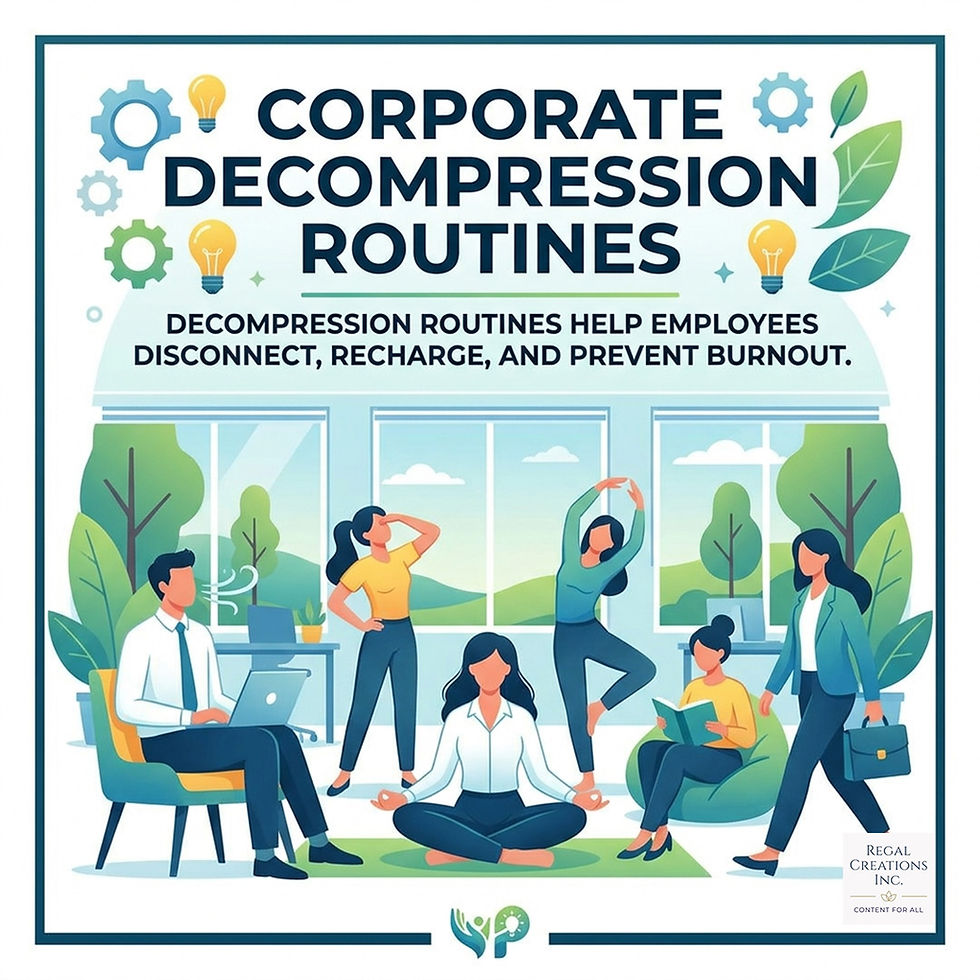
Corporate decompression routines are structured habits employees use to mentally disconnect from work stress, recover energy, and prevent burnout after intense professional demands. As workplaces become faster and always connected, companies and individuals are exploring ways to create healthier transitions between “work mode” and personal life.
Key Practices:
End-of-day shutdown rituals: Closing tasks, planning tomorrow’s priorities, and mentally signaling the end of work.
Digital boundaries: Limiting after-hours emails, notifications, and workplace communication.
Mindful transitions: Activities like walking, meditation, journaling, or breathing exercises to reset the mind.
Physical recovery habits: Exercise, stretching, hobbies, and relaxation routines that reduce stress.
Corporate wellness programs: Companies introducing wellness hours, recovery breaks, and mental health support.
Examples:
A company introducing a “no meeting Friday afternoon” policy to allow employees time to recharge.
Employees using a 15-minute post-work walk to separate professional stress from home life.
Organizations encouraging vacation usage instead of rewarding constant availability.
Conclusion:
Corporate decompression routines help create a healthier work culture by making rest and recovery part of productivity rather than a break from it.
Remote workers often struggle with blurred boundaries between professional and personal time. Successful transition requires creating intentional routines that signal the end of the workday and help the mind disconnect.
Effective Strategies:
Create a shutdown ritual: Finish the day by reviewing completed tasks, organizing tomorrow’s priorities, and officially closing work apps.
Designate a workspace: Keeping a separate work area helps create a psychological boundary between work and home.
Change environments: A short walk, workout, or simple household activity can act as a transition from “employee mode” to “personal mode.”
Set digital boundaries: Avoid checking emails and messages after working hours unless necessary.
Build personal routines: Reading, hobbies, family time, or relaxation activities help restore focus and energy.
Examples:
A remote employee changes clothes after work and takes a walk to recreate a “commute home.”
Teams establish clear offline hours where employees are not expected to respond.
Workers use end-of-day planners to mentally close unfinished tasks.
“Out of office mode” refers to the intentional shift from professional responsibilities to personal recovery time. It is a mindset where employees disconnect from work demands, reduce digital distractions, and allow themselves to fully recharge.
Key Elements:
Mental detachment: Letting go of unfinished tasks and avoiding constant work-related thoughts.
Digital disconnect: Turning off notifications, limiting emails, and respecting personal time.
Recovery activities: Spending time with family, pursuing hobbies, exercising, traveling, or relaxing.
Clear boundaries: Creating a routine that separates work identity from personal identity.
Permission to rest: Viewing recovery as essential for long-term productivity, not as laziness.
Examples:
A remote worker ends the day by closing their laptop and taking a walk to mark the transition.
Employees set automatic “out of office” replies during vacations to protect uninterrupted rest.
Companies encourage employees not to contact colleagues during approved time off.
For remote workers, the absence of a physical evening commute removes a natural transition period between professional and personal life. Without the journey home, employees often need to create their own “mental commute” to shift from work mode into relaxation mode.
Ways to Create a Virtual Commute:
Post-work walks: A short walk after closing the laptop can recreate the feeling of leaving the office.
Transition rituals: Changing clothes, making tea, listening to music, or journaling can signal the end of the workday.
Workspace separation: Physically leaving a home office or putting away work equipment helps create boundaries.
Digital shutdown: Logging out of work apps and silencing notifications prevents work from continuing into personal time.
Mindful activities: Exercise, hobbies, or family interactions help the brain reset.
Example:
A remote employee finishes work at 6 PM, shuts down their computer, takes a 20-minute walk, and returns home feeling refreshed—even though they never left the house.
Examples of Corporate Decompression Routines
End-of-day shutdown rituals
Employees spend the last 10–15 minutes reviewing completed tasks, planning the next day, and closing work applications to create a clear stopping point.
No-email-after-hours policies
Companies discourage late-night emails and messages to protect employees’ personal time and reduce burnout.
Digital detox periods
Workers switch off notifications, log out of communication platforms, and avoid checking work devices after office hours.
Post-work transition activities
Employees use walks, exercise, meditation, or hobbies as a “mental commute” between work and personal life.
Meeting-free recovery blocks
Organizations create time slots without meetings so employees can focus, relax, and manage stress.
Wellness breaks during work hours
Companies offer short breaks for stretching, mindfulness, breathing exercises, or relaxation activities.
Virtual team decompression sessions
Remote teams organize informal chats, online games, or social activities to reduce workplace stress.
Flexible work boundaries
Employees choose schedules that allow them to complete work effectively while maintaining personal routines.
Conclusion on Corporate Decompression Routines:
Corporate decompression routines help employees create healthier boundaries between work and personal life, reducing stress while improving focus, creativity, and long-term productivity.
Thanks for reading!!!!!!


Comments